In India, where family values and respect for elders are deeply rooted, it is alarming that healthcare access for elderly in India is still a struggle. A recent study by the World Health Organization (WHO) and the Indian Council of Medical Research (ICMR) revealed that elderly people—especially in states like Uttar Pradesh and Bihar—often travel long distances for basic treatment.
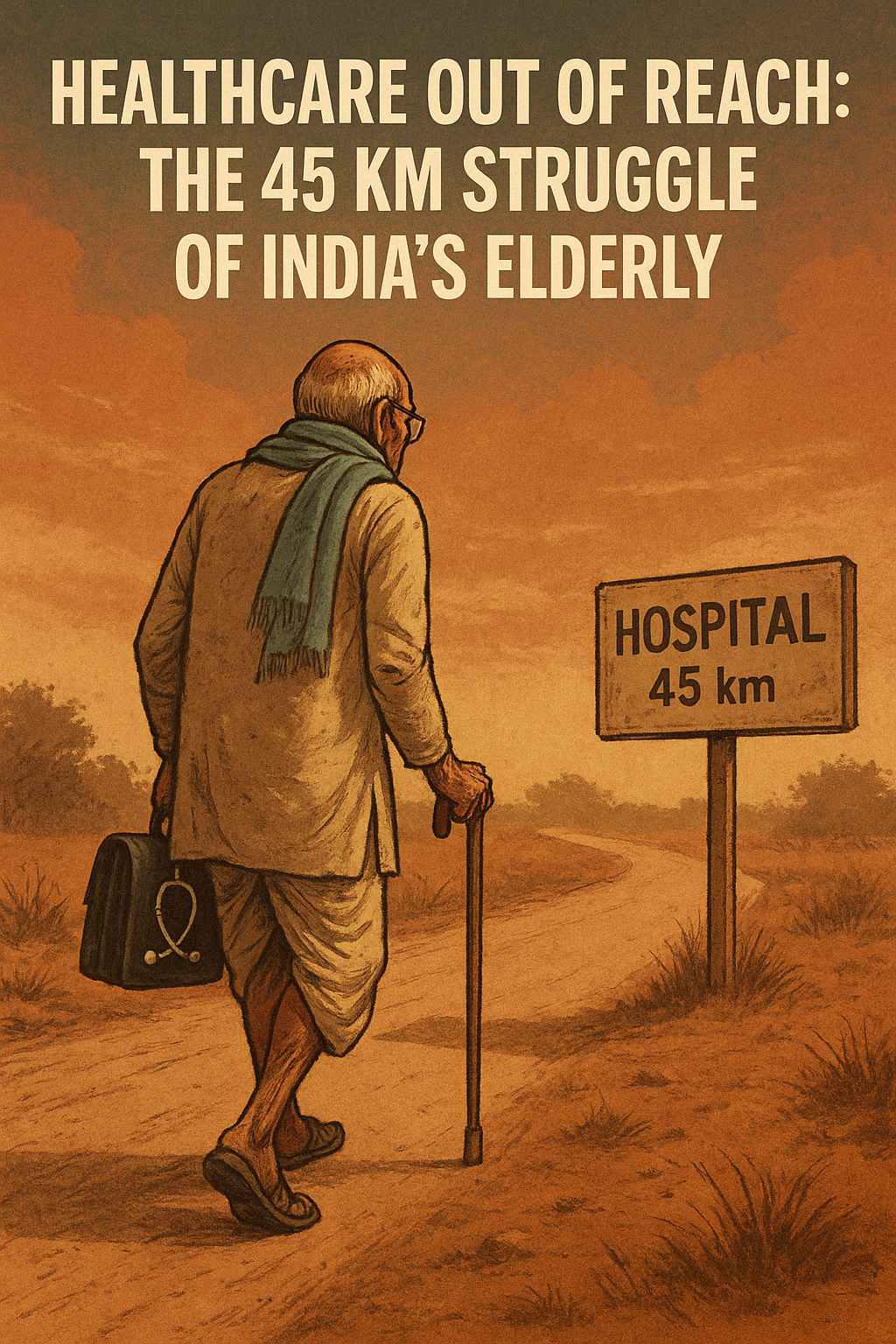
The report highlights a grim reality: many elderly patients travel an average of 45 kilometers for hospital admissions and about 15 kilometers even for outpatient (OPD) services. For younger people, this distance may seem small. However, for the elderly with mobility issues or chronic illnesses, it becomes a serious challenge.
The Harsh Reality of Healthcare Access for Elderly in India
The survey of more than 32,000 elderly citizens revealed deep inequalities in healthcare access. While seniors in urban areas can often find OPD services close to home, those in rural regions face major struggles. This problem reflects long-standing gaps in infrastructure, planning, and governance.
Urban vs Rural Divide in Elderly Healthcare
- Urban India: Around 73% of elderly people can access OPD services within 5 kilometers.
- Rural India: Only 41% of elderly residents have similar access.
This difference highlights how rural elderly citizens remain deprived of doctors, diagnostic centers, and reliable transport. For them, healthcare access is often out of reach.
Challenges in Mountain States
In states like Sikkim and Himachal Pradesh, healthcare access for elderly in India is even more limited. Many seniors travel more than 10 kilometers for basic OPD consultations. In Mizoram and Nagaland, despite government efforts, poor terrain and limited infrastructure continue to block access to nearby facilities.
Lessons from Kerala and the North-East
There are, however, success stories. Kerala, Tripura, and Manipur have shown that strong public health systems make healthcare more accessible. In these states, more than 80% of elderly residents access OPD services within 5 kilometers.
This success comes from:
- strengthening primary healthcare centers,
- using mobile health units, and
- training community health workers such as ASHA volunteers.
These models prove that better planning can close the healthcare gap.
Why Healthcare Access for Elderly in India Remains Limited
Several challenges create barriers for seniors:
- Inadequate Primary Healthcare Centers (PHCs): Many PHCs lack doctors, nurses, and medicines.
- Poor Transportation: In rural areas, broken roads and limited public transport increase the struggle.
- Economic Issues: Many elderly citizens depend on small pensions or family support, making travel unaffordable.
- Lack of Geriatric Services: Hospitals rarely provide specialized care for seniors.
Steps Needed to Improve Healthcare Access for Elderly in India
To reduce the 45 km healthcare gap, India must act quickly:
- Strengthen PHCs with staff, equipment, and medicines.
- Deploy mobile health units for remote and hilly areas.
- Train doctors in geriatric healthcare.
- Provide subsidized transport for seniors.
- Expand telemedicine and digital health consultations.
- Encourage community-based healthcare with NGOs and volunteers.
Conclusion
India’s elderly deserve easy and fair healthcare access. The seniors who built this nation should not walk 45 kilometers for basic medical care. Instead, the healthcare system must move closer to them—with compassion, dignity, and respect.
Improving healthcare access for elderly in India is not just a necessity, it is a responsibility.meter journey for our senior citizens. Instead, the healthcare system must take steps towards them, ensuring dignity, accessibility, and compassion for India’s elderly.